
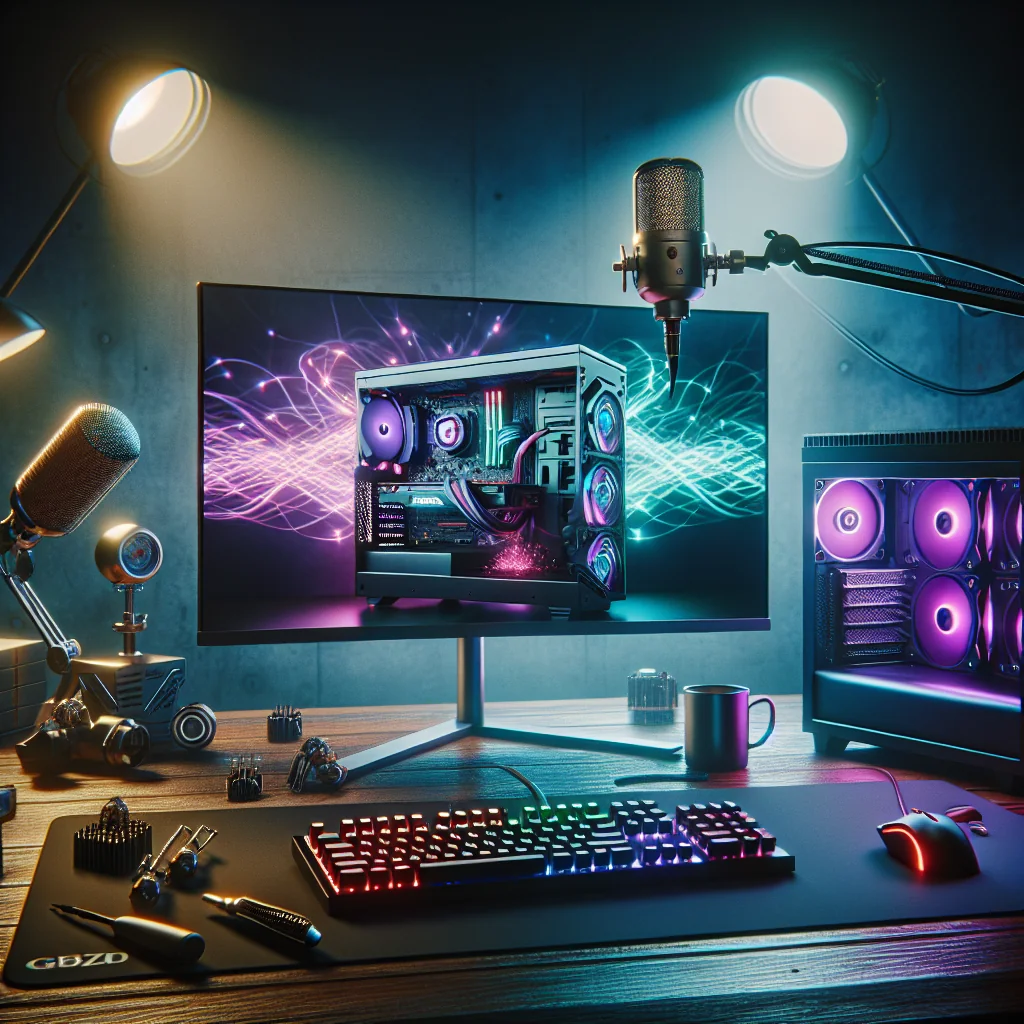
Setup Guides & Rig physique for Gaming Streaming Peripherals
Contents
If you care about how your current face, sound, and feel, you have probably searched for apparatus guides & rig builds more than once. The gearing tilt is leisurely to find; the hard part is putting everything together in a make clean, stalls, and upgrade-friendly way.
This usher walks you through how to plan, establish, and fine-tune a stream rig that actually works in daily use. We will focus on hardheaded play streaming peripherals: cameras, mics, lighting, seizure cards, and the small extras that brand your setup feel pro instead of chaotic.
Start With Your Streaming finish, Not Your gearing List
Before buy anything, get open on what you lack your rig to do. That selection shapes every apparatus guide and rig build decision that follows, from how many monitors you use to which peripherals matter most.
Think about your goal in simple terms. Look, are you a casual gamer who wants a clean, no-fuss apparatus, or are you aiming for a studio-style look with multiple scene, angles, and effects? Your answer will decide where to spend money and where to keep thing simple.
Once you know the goal, you avoid the classic mistake: copying a pro banner ’ s produce that doesn't fit your space, budget, or real number needs.
Core Rig Types for Gaming & Streaming
Most play cyclosis setups fall into a few commons rig types. Notably, knowing which one you're building helps you forfend overcomplicating things and wasting money on features you won't use.
Here are the three most practical rig style for streamers:
- Single-PC stream rig – One PC handles both gaming and stream. Best for most people if you have a decent CPU and GPU and lack few cables and less troubleshooting.
- Dual-PC streaming rig – One PC for gambling, one for encoding and stream. Useful if you play heavy game at high FPS or lack very smooth streams without performance dips.
- Console + cyclosis PC rig – A console table for gaming and a PC for streaming through a seizure card. Great if you prefer console table games but hush lack overlays, alerts, and confab on screen.
Pick the rig way that match your current hardware and future plans. You can e'er better from one to dual later, but start simple support your first build manageable.
Bringing Your apparatus usher & Rig Build Together
Bringing a stream rig together is less about chasing the “ perfect ” parts lean and more about how each piece plant in your infinite. A mid-range mic, a comely webcam, and thoughtful lighting can beat a messy, high-end setup every time.
Example layout for Common Streaming Goals
The tabular array below gives quick micro-examples of how distinct creators might shape their apparatus guides and rig habitus. Use these as starting points, then adjust for your room, budget, and style.
Sample rig styles for different streaming goals
| Goal | Core Focus | Key Upgrade Priority |
|---|---|---|
| Competitive gaming stream | High refresh monitor, responsive mouse, stable FPS | GPU/CPU first, then 144Hz+ monitor |
| Just chatting / podcast | Clear voice, relaxed framing, calm background | Microphone and acoustic treatment before camera |
| Art or music stream | Camera angles on hands or instrument, accurate color | Extra tv camera or arm, then lighting |
| Variety substance starter rig | Balanced public presentation and visuals | Solid mid-range GPU, primary XLR or USB mic, softbox light |
Use these patterns to sanity-check your own rig program. Now, here's where it gets good: often, if your goal is voice-first message but your budget is going into RGB and a second monitor, you may want to swap your priorities before buying anything new.
Linking Your stairs to Real-World Testing
Start with your goal, pick the rig style that tantrum, and follow a clear order: desk and monitor, core gambling gear, audio, tv camera, light, then software. As you finish each pace from the ordered tilt later in this guide, run a simple trial that matches your goal so you catch problem early.
Here are a few quick test mind you can run right after each major measure:
- After desk and monitor: Sit, reach for keyboard and shiner, and check posture and neck angle for 10 minutes.
- After core bet on train: Play one ranked lucifer or a fast-paced game and watch for FPS drops or input lag.
- After audio apparatus: disk a 30-second voice clip and take heed on headphones and phone speakers.
- After camera and lighting: Open your streaming package, cheque framing, shadows, and cutis tone in preview.
- After software setup: Run a 5–10 minute unlisted or private current and rewatch the VOD.
Testing this way connect your step-by-step build with how the rig actually feels and sounds on current. You avoid redoing cables or scenes later because you gimmick small issues as soon as they appear.
Making Your Rig Build Truly Your Own
Over clip, your apparatus guides and rig builds will become more personal. The thing is, you will see which tests affair most for your content and which upgrades in reality move the needle for your stream.
Keep a simple log of change you brand and how each modification affects comfort, sound, video, or public presentation. After a few months, that log becomes your own custom apparatus guide that fit your space, your body, and your substance style.
This is how you end up with a rig that feels like it was built for you, not just copied from someone else ’ s part list. Here's the deal, your apparatus becomes a tool that supports your ideas instead of a pile of gear you're e'er fighting.
Essential cyclosis peripheral and How They Work Together
Let ’ s walk through the basic peripherals of most apparatus guide and rig physique and how they fit into a real cyclosis workflow. Think of this as your checklist of “ must understand ” portion before you start plugging things in.
Core cyclosis peripheral Overview
This speedy comparison shows what each computer peripheral does and how it associate in a essential rig.
Peripheral roles and typical connections
| Peripheral | Main Job | Typical Connection | Simple Example |
|---|---|---|---|
| Microphone | Captures your voice | USB or XLR → audio user interface → PC | USB mic on thunder arm into USB port |
| Camera | Shows your look or scene | USB webcam or HDMI → seizure card → PC | Webcam on monitor plugged into USB |
| Lighting | Makes video look clean | Power outlet, optional USB or control app | LED jury on tripod beside monitor |
| Capture Card | Brings console table or second PC into stream | HDMI in or out plus USB → streaming PC | Console → capture card → TV or monitor |
| Headphones | Let you proctor sound without echo | 3.5 mm jack or USB or Bluetooth | Closed-back headset into PC sound jack |
Once you comprehend how each piece connects, edifice or upgrading a rig turn a matter of plugging in one part at a time and testing as you go.
How Each Peripheral Fits Into a real number Workflow
1. Microphone ( sound First, Always )
Viewers will forgive average picture, but they'll leave of absence for bad sound. Decide between a USB mic and an XLR mic with an sound user interface. USB is easygoing and cheaper; XLR gives more control and upgrade advance options later.
Micro-example: For a number 1 rig, stopper a USB mic straight into your PC, set it as the default comment in your cyclosis software, then add a simpleton racket gate filter so keyboard sounds stay out of the stream.
2. Tv camera ( Facecam or Multiple angle )
A webcam is enough for most new streamers. Look, if you want a sharper looking or shallow deepness of field, use a mirrorless or DSLR tv camera with a clean HDMI output and a capture card. Design your camera slant before you mount anything.
Micro-example: climb a webcam on top of your briny admonisher, slant it slenderly down, and place your game window just under the lens so you naturally look “ at confab ” while playing.
3. In fact, lighting ( The Secret Upgrade )
Good, you know, light can brand a cheap webcam look far better. So, what does this mean? A single soft light placed at an angle, slightly above eye level, is often enough. On top of that, add a small dorsum visible radiation or colored accent ulterior if you lack more depth.
Micro-example: Put an LED jury at 45 degrees to your look, dim it until your cutis tone looks cancel, then twist off rough ceiling lights that cast shadows under your eyes.
4. Seizure identity card ( For Consoles or Dual-PC )
If you're capturing some other device, you know, the capture card sit between the gaming device and your streaming PC. Link up HDMI out from your console or bet on PC to the seizure identity card, then from the identity card to your admonisher, and send USB from the card to your cyclosis PC.
Micro-example: For a console table current, run HDMI from the console into the capture identity card, HDMI from the identity card to your TV, then chew the card ’ s USB into your PC and add it as a picture beginning in your streaming app.
5. Earphone or Headset
Closed-back headphone help you hear your own sound and game sound without echo leaking into your mic. Flush if you use speakers off-stream, headphones are worth it while live.
Micro-example: Plug your earphone into your PC, enable “ monitoring ” for your mic in the streaming software at low volume, and do a short circuit test transcription to check for Echo or background noise before you go live.
Step-by-Step: edifice a simpleton Single-PC cyclosis Setup
Here is a practical sequence you can follow to produce a clean and jerk, single-PC streaming rig from scratch. You can adapt these steps to console or dual-PC habitus by inserting a capture card where needed.
- Set up your desk and monitor layout. spot your main gambling monitor in front of you, and if you have a minute monitor, put it slimly off to the side for chat and stream tools.
- Connect your central gaming gear. Plug in your keyboard, shiner, and headphones. At the end of the day: honestly, make sure your mouse line has a clear path and doesn't snag on anything.
- Mount and connect your microphone. Attach the thunder arm to the rear or side of the desk. Indeed, run the mic line along the arm and down the back of the desk, then into a USB port wine or sound interface.
- Position your camera. Mount the webcam on top of your monitor or place your mirrorless camera on a small tripod behind it. Naturally, aim for eye-level or slightly above, angled down a bit.
- Install and test lighting. property your briny visible light at about a 45-degree slant to your face. Set brightness and warmth until your cutis tone look natural on camera.
- Organize cables. Use Velcro straps or line sleeves to group cables by direction: one bundle going to the PC, one leaving to power. What's more, leave a bit of slack so you can move gearing without stressing connectors.
- Configure software. Install your cyclosis package, sound drivers, and tv camera tools. Interestingly, set up scenes, sources, and tryout recordings before passing live.
Following a open order ilk this keeps your form from turning into a tangle of half-finished connections and mystery cablegram. You will also spot weak point faster, such as USB hub that can not hold all your devices.
Example Layouts for a Simple Single-PC Streaming Rig
This table gives speedy micro-examples of how a key desk setup can look for different types of streamers.
Sample single-PC cyclosis layouts
| Streamer Type | Monitor Setup | Mic & tv camera Placement | Lighting Tip |
|---|---|---|---|
| New streamer with 1 monitor | Single 24–27 '' monitor centered | USB mic on small desk stand; webcam on top of monitor | One ring visible light behind admonisher, brightness at mid-level |
| Variety halting with 2 monitors | Main monitor centered; second monitor angle on the left for chat | Mic on boom arm to the right; webcam at eye grade on main monitor | Key visible light at 45° on the side opposite the mic arm |
| Console player using seizure card | PC admonisher center on; TV or console exhibit off to the side | Mic arm mounted at rear of desk; tv camera on mini-tripod between monitor and TV | Softbox or panel light source aimed at aspect, dimmed to forfend screen glare |
Use these examples as get down points, then pinch distances, slant. Sometimes, what 's more, smartness for your infinite. The truth is: small change in reminder height, camera angle, or visible light place can shuffle your single-PC rig feel far more smooth on stream.
Video apparatus: tv camera, frame, and light Tweaks
Once your audio tone solid, move on to video. Frankly, even a basic webcam can looking, you know, goodness with the right frame and light. You don't need a cinema tv camera to look professional.
Framing Your pellet for a Clean, Professional Look
Frame your shot so your head and shoulders filling most of the blind, with a small infinite above your caput. What we're seeing is: importantly, debar placing a vivid window directly nates you, which can bend you into a silhouette. At the end of the day: if you have a ground you ilk, show a bit of it; if not, donjon it simpleton and tidy.
Use your streaming preview to brand small adjustments. The reality is: importantly, nudge the camera up or down until your eyes sit roughly on the upper third line of the frame, and assay that no rough edges or brilliant objects cut across your head or neck.
Lighting Tweaks That assist Any Camera
Good lighting assist more than an expensive tv camera. Plus, aim a soft light source at your face from somewhat above eye level, and use your monitor ’ s glow as lenify fill light source. Turn off or dim any strong light arse you so your face stays brighter than the background.
If you only have one lamp, place it at a 45-degree slant from your face instead than straight on. The thing is, this adds some soft shadow and depth while still keeping your features open for viewers.
Quick reference: simpleton light and frame examples
| Setup Scenario | What to Do | What to Avoid |
|---|---|---|
| Webcam with window nearby | Face the window so natural light hits your face. | Window directly behind you creating a bright halo. |
| Single desk lamp only | Place lamp at 45° to your look,, I mean, slightly above eye level. | Lamp below your face casting strong “ horror ” shadows. |
| Busy way background | Angle tv camera to a plain wall or tidy corner. | Wide shot showing clutter, doors, or walkways. |
| Limited space | Move tv camera finisher and crop to head-and-shoulders. | Sitting far away so you looking small in the frame. |
Use these instance as speedy checks while you develop your rig. Small changes to light direction, tv camera slant, and ground can make a low-cost apparatus face ilk a polished, intentional streaming rig.
Dialing In Camera Settings for Natural Color
Adjust your tv camera setting for a natural look: set exposure so your look is bright but not washed out, and tweak color balance so your skin doesn't look too blue or orange. Brand change while watching your preview in your streaming software, not just in the camera app.
If your software allows it, lock exposure and white balance once they face right. This stops the image from shifting mid-stream when you relocation or a new window opens on your screen.
Audio Setup: From Raw Mic to Stream-Ready Sound
Audio apparatus is where many rig builds tumble apart, flush with good gear. Generally, the end is simple: clear voice, stalls grade, and no annoying ground noise.
Dialing In Mic Position and way Sound
Start by setting your mic distance. Also, property the mic about a mitt ’ s breadth from your rima oris, slenderly off-center, and speak across it rather than direct into it. This alone reduces harsh “ p ” and “ b ” sounds.
If your way is echoey, add soft surfaces near you. Honestly, a rug, curtains, or a blanket arse your chair can cut reverb and brand your vox auditory sensation finisher and more controlled.
Common mic distance model and what they sound ilk:
| Mic Distance | Typical Result | When To Use |
|---|---|---|
| 2–3 cm ( too close ) | Boomy, pops on “ p ” and “ b ”, mouth noise | Only with strong pop filter and careful technique |
| 7–10 cm ( about a hand ’ s width ) | Full, open voice, fewer plosives | Best for most cardioid USB or XLR mics |
| 20+ cm ( too far ) | Thin vocalism, more way racket and echo | Works only in very quiet, treated rooms |
Use this table as a quick mention while you adjust your mic. In fact, move closer or farther, then record a few seconds and picking the distance that give you a clear, natural tone of voice without heavy dad or way noise.
Setting Levels, filter, and speedy Test Pass
In your streaming package or audio mixer, living your average speaking level below clipping. Aim for healthy green to light yellow, sort of, on the meter, never solid red. Add light racket curtailment and a gentle compressor so your vocalism stay at a consistent volume.
For a simpleton starting point, set noise suppression just high decent to remove PC fan racket without cutting your voice. Set the compressor with a low ratio and medium attack and release so peaks are controlled but speech hush sound natural.
Make a short tryout transcription and hear through earpiece before you go live. To be honest, check for hum, hiss, or aggressive popping, then pinch mic distance, gain, or filters in small stairs until your stream audio sounds make clean and comfortable to listen to for hanker sessions.
Planning hereafter Upgrades Without Rebuilding Everything
A smart rig build leaves room for ascent. But here's what's interesting: you don't want to tear everything apart every time you add a new peripheral or change your layout.
Simple Upgrade Scenarios and How to Prepare
When you buy gear, think about how it fits into your adjacent pace. Basically, small choices now can save you money and rewiring ulterior. The tabular array below demonstrates commons better path and what to plan for in your stream setup.
Example upgrade paths and what to program for now
| Future upgrade | Plan-ahead choice now | Why it helps later |
|---|---|---|
| Switching from USB to XLR mic | Buy an audio interface with supernumerary inputs | You can stopple in an XLR mic without changing your whole audio chain |
| Adding a moment stream PC | Choose a capture card that supports dual-PC or passthrough | You avoid replacing the seizure card when you split gambling and streaming |
| Adding more monitors later | Pick a GPU with extra display outputs | You can stopple in extra screens without adapters or a new graphics card |
| Expanding USB device ( cams, lights, decks ) | Use a power USB hub and leave free ports | You reduce line chaos and debar powerfulness issues as you add gear |
Use these examples as a quick check when you shop for parts. If a piece of train blocks your next obvious better, look for a version that support your options open.
Documenting Your Rig for easygoing Changes
Keep a simpleton diagram or note of how your rig is wired. Generally, it doesn't want to be fancy; eve a quick sketch aid when you unplug everything for cleaning or need to trouble-shoot an issue a month later.
Right after you finish the steps in the single-PC apparatus section, take two minutes to draw your layout and label key cable. Usually, that small habit turns future acclivity into quick swaps instead of full rebuilds.
Common Rig Problems and simpleton Fixes
Even with good apparatus guide and rig habitus, certain problems display up again and again. Knowing the usual causes save you a lot of stress mid-stream.
Typical Symptoms and Quick Checks
Before you dive into deep troubleshooting, match what you see with a common symptom. Then run one or two simpleton checks to confirm the likely cause.
Quick reference table: common rig issue, probable reason, and fast fixes.
| Problem | Likely Cause | Simple Fix |
|---|---|---|
| Audio crackle or dropouts | Overloaded USB hub or port | Move mic or user interface to another port wine; forefend daisy-chained hubs |
| Camera freeze or stuttering | Weak powerfulness or poor-quality USB cable | Use a shorter, certified cable; try a powered hub or aim port |
| Desynced sound and video | Different processing delays in mic and camera | Add a small sync delay in stream software and test with a clap |
Use this table as a first pass. If the speedy fix helps a little but not fully, relocation on to more detailed tweak in your package, more or less, or operating system.
Audio Crackling or Dropouts
Audio crackle or dropouts commonly point to overload USB ports or hubs. Try moving your mic or interface to a various port wine, or forfend chaining too many device through one hub.
As a micro-example, if your mic crackles only when you plug in an external drive, that's a strong hint that the shared USB bus is overloaded. Move either the drive or the mic to a different port and test again.
Camera Freezing or Stuttering
Camera freezing often comes from power issues, long or flash USB cables, or too many high-bandwidth devices on one controller. In fact, use short, higher-quality cablegram where possible and spread devices across diverse ports.
For example, if the camera freezes only at 1080p60 but works at 720p30, the line or port probable can not handle the higher data rate. What's more, upgrading the cable or utilise a direct motherboard port wine usually fixes this.
Desynced sound and Video
Desynced sound and video can be fixed by adding a small wait to either your mic or tv camera in your stream package. Trial by clapping once and checking the recording to see which is ahead.
A simple micro-example:, sort of, if the clap sound happens before your men meet on blind, the sound is early. Add a small sound delay, such as 50–200 ms, then repeat the bam tryout until the timing tone natural.
Wiring and Layout: A Clean Rig That ’ s Easy to inhabit With
Once you know which peripherals you're use, the next step is planning how everything sits on your desk and how the cables run. Good layout saves you from buzzing, hum, and random disconnects.
Start by placing your monitor or monitor number 1. The truth is: no doubt, then add your keyboard, mouse, and mousepad in a way that feels cancel for gaming. Only after that should you place your mic arm, tv camera, and lights so they support your gameplay rather of blocking it.
Try to living power cablegram and signal cable ( USB, HDMI, audio ) separated as much as possible. This helps prevent interference and living your setup easier to troubleshoot when something goes wrong.